Care home prices in 2026: What self-funders are paying and why reform matters
The average starting price currently being quoted by care homes in West London, within Autumna’s latest sample, is £2020. That amounts to more than £105,000 a year. And that is a “price from” figure, rather than necessarily the final fee paid by someone who requires nursing or specialist dementia care.
In Edinburgh, the corresponding average is £1,880 a week, or almost £98,000 a year. And in Cardiff, £1,500 a week, or £78,000 a year.
Even in the less expensive parts of the country, a self-funded residential care-home placement can now cost more than £60,000 a year.
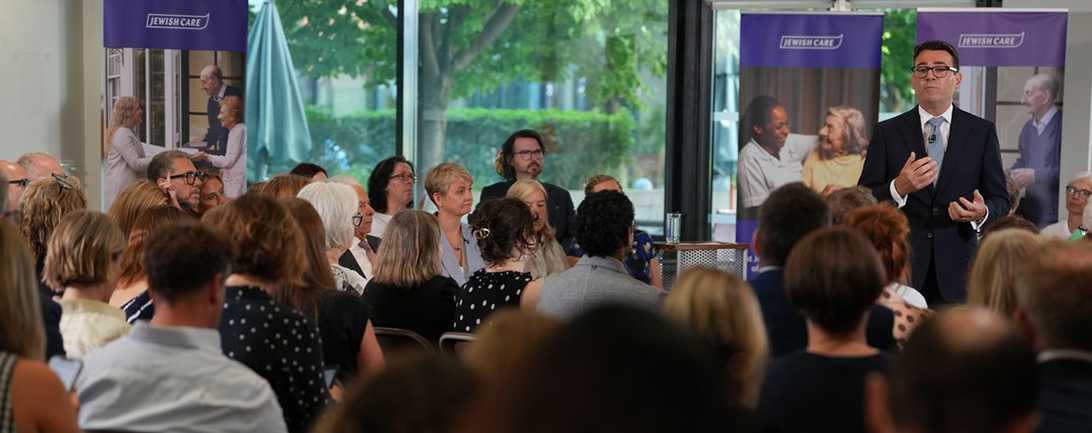
These figures partly explain why social care has moved so quickly to the top of the political agenda since Andy Burnham entered Downing Street. However, politicians can talk about commissions, cross-party consensus and future funding models, but families looking for a care home today face a much more immediate question:
How much will suitable care cost, and how long will we be able to afford it?
How Autumna calculated its 2026 care-home prices
July is a particularly useful time to assess care-home fees.
Many providers review their prices around April, at the beginning of the new financial year. It can then take two or three months for the updated information to appear consistently across the sector.
Autumna lists more than 10,000 care homes across the UK. For this benchmarking exercise, we used provider-supplied information from a sample of approximately 20% of those homes.
These are not Office for National Statistics figures and they should not be treated as individual quotations. They are intended to give families a realistic indication of the starting prices currently being advertised by care homes in different areas.
Crucially, these are generally “weekly fees from” for a self-funding residential placement. The final amount may be higher depending on the person’s needs, the type of room chosen and whether nursing, dementia or other specialist support is required.
Average weekly care-home prices by area
There is no single UK average that tells the whole story. Prices vary too widely between regions (and sometimes between neighbouring towns), for one national number to be particularly helpful.
Autumna’s broad regional benchmarks currently look like this:
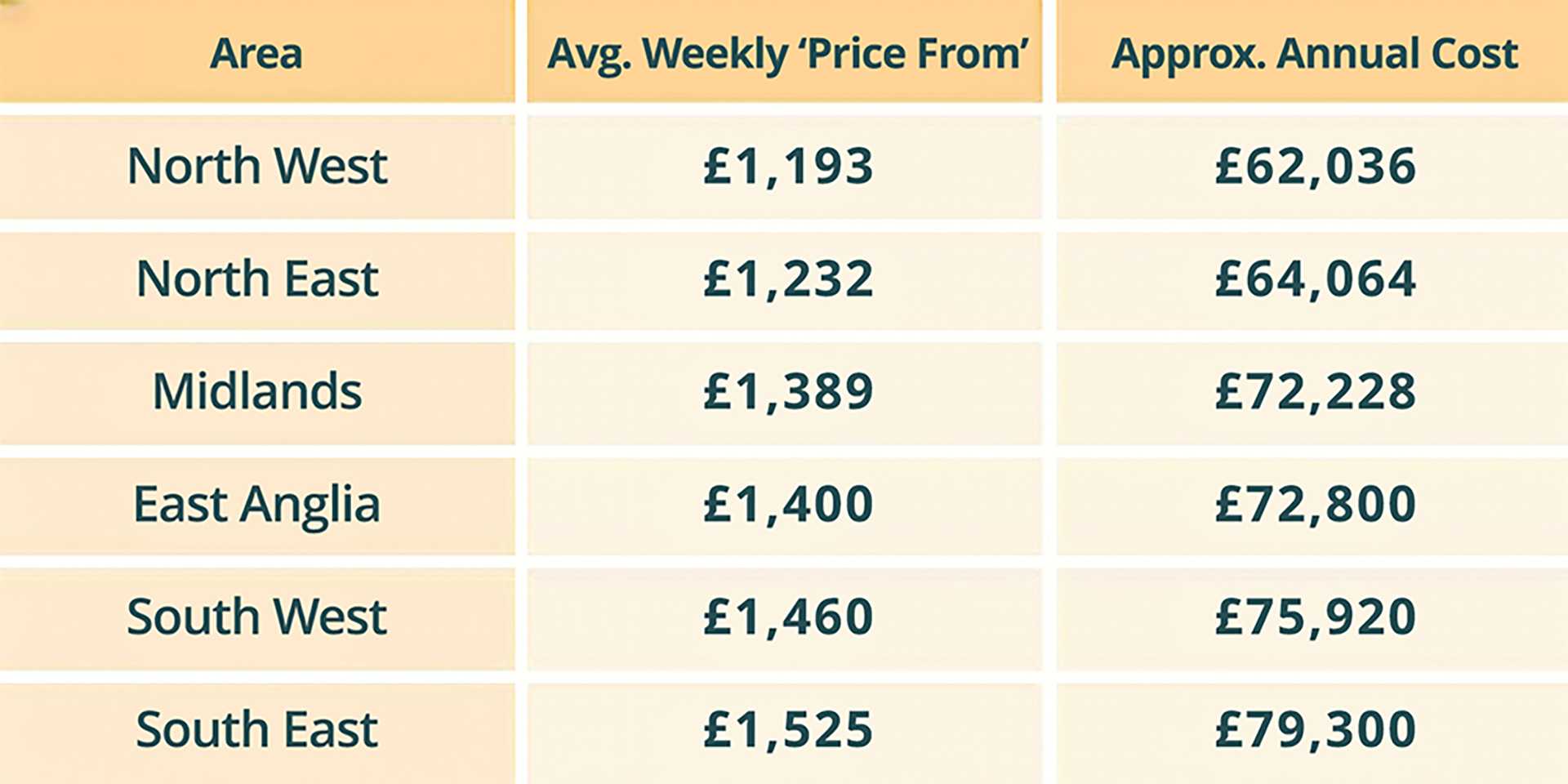
The difference between the North West and South East benchmarks is £332 a week. Over a full year, that becomes a difference of more than £17,000.
Location can therefore have a major effect on affordability. But moving a loved one further away to reduce the fee can introduce other costs (both financial and emotional) if relatives are then less able to visit regularly.
Some areas are seeing particularly sharp increases
The overall picture is not simply that expensive areas are getting more expensive. Some of the largest percentage increases are appearing in places where prices have historically been lower.
In Winchester, the average starting fee in our sample has increased from approximately £1,535 to £1,590 a week - an increase of around 3.6%.
In Oxford, the average has risen by more than 6% to approximately £1,615 a week.
One of the most significant changes is in Sunderland, where the average starting price has risen by approximately 10%, from £1,080 to £1,190 a week. Sunderland remains less expensive than many southern locations, but the rate at which its prices are increasing will still be felt by local families.
Care providers face many of the same pressures as other employers, including higher wage bills, employer National Insurance contributions, energy costs and general inflation. Care is also highly labour-intensive: good care depends on having enough appropriately trained and supported people available throughout the day and night.
What does a “price from” include?
A displayed weekly fee should be treated as the beginning of the conversation - not the final answer.
Before agreeing to a placement, families should ask the home to provide a personalised, written quotation that explains:
- what is included in the core weekly fee;
- which care needs could lead to an additional charge;
- whether nursing or dementia support is priced separately;
- how frequently the fee is reviewed and how much notice is given of increases.
It is also worth asking what happens if the resident’s needs change. A fee that appears manageable at the beginning of a placement may increase if more support is subsequently required.
The quotation should distinguish between the cost of providing personal care and the daily living expenses involved in running a care home: accommodation, meals, laundry, housekeeping, heating, maintenance and other services. These daily living expenses are sometimes referred to as “hotel costs”.
That distinction may sound technical, but it is central to the social-care funding debate.
Why Andy Burnham’s reform drive matters to self-funders
Within days of becoming Prime Minister, Andy Burnham placed social care among the defining issues of his premiership.
Speaking at a care home on 29 July 2026, he drew on his own family’s experience of care and argued that reform is essential not only for older and disabled people, but also for the future of the NHS.
The government announced that Baroness Louise Casey’s review would be accelerated, with a plan for delivering a National Care Service now expected by summer 2027 rather than 2028. A public Big Conversation on Care has also been launched, alongside cross-party talks and more immediate work on care-worker pay, training, career progression and job security.
The stated ambition is for an English National Care Service that is person-centred, preventative, sustainably funded and much better integrated with hospitals, primary care and community services. GOV.UK
The question of how to pay for it, however, remains unresolved.
That is where today’s care-home prices become impossible to ignore
The current system still leaves many people paying the full fee
Social-care funding is devolved, so the rules differ across England, Wales, Scotland and Northern Ireland. Autumna’s pricing data covers the UK, but the current Westminster reform proposals and the following financial thresholds relate specifically to England.
For the 2026–27 financial year, England’s upper capital limit remains £23,250. Broadly, someone whose assessable assets are above that amount is responsible for paying the full cost of their care-home placement.
The lower capital limit remains £14,250. Between the two limits, support is means-tested and a contribution is calculated from the person’s income and capital. GOV.UK
Previous plans would have introduced an £86,000 lifetime cap on eligible personal-care costs. Those reforms were cancelled in July 2024.
Even had the cap been introduced, it would not have covered the entire care-home bill. Daily living or “hotel” costs would not have counted towards it. A resident could therefore have reached the proposed £86,000 limit and still faced substantial ongoing accommodation and living expenses. House of Commons Library
This is an important lesson for any future reform. A headline cap on “care costs” is not necessarily a cap on the amount a resident will pay to live in a care home.
The detail of what is covered and what remains the individual’s responsibility, will be just as important as the headline figure.
Reform must address fairness as well as funding
The current system can feel like a lottery.
A family whose loved one dies following a short illness may experience considerable emotional upheaval but relatively limited care costs. Another family whose loved one lives for years with dementia or another long-term condition may experience the same emotional distress alongside potentially life-changing financial consequences.
Care-home fees of £60,000, £80,000 or more than £100,000 a year make that inequality very real.
Burnham has said that people can see everything they have worked for wiped out by care costs. He has also argued that social care and the NHS cannot be treated as separate systems: when appropriate support is unavailable in the community, people can enter hospital unnecessarily or remain there after they are medically ready to leave. GOV.UK
Reform must therefore answer several difficult questions.
How much responsibility should sit with the individual and how much with the state? Should everyone contribute through taxation or insurance? Which services should be universally available? How should accommodation and daily living costs be treated? And how can the system reward and retain the skilled people who provide care?
There will be no painless answer. But repeatedly postponing those decisions does not remove the cost, it simply leaves families, unpaid carers, councils, providers and the NHS to carry it in different ways.
Ownership alone does not determine quality
The role of privately operated care providers is also likely to form part of the reform debate.
Questions about excessive profit, financial transparency and where public money ultimately goes are legitimate. But ownership structure should not become a shortcut for judging the quality of an individual home.
There are excellent private care homes, excellent charitable homes and excellent not-for-profit providers. There are also homes in every part of the sector that may fall short of the standard families should expect.
Burnham himself acknowledged in his July speech that he had seen good care organisations in all sectors. Autumna agrees: quality must be assessed home by home, using evidence that is current, relevant and specific to the people providing care there today. GOV.UK
Price matters, but so does value
A care-home placement may be one of the largest financial commitments a family ever makes. It is therefore understandable that price becomes a major part of the decision.
But the cheapest home will not necessarily offer the best value, just as the most expensive home is not automatically the best.
The right care home can provide safety, companionship, nutritious food, meaningful activities and skilled support. For someone who has become isolated at home, it can open the door to friendships and a renewed sense of purpose.
Families should examine the latest inspection information, but also check when the inspection took place. They should look at recent feedback, food-hygiene information, activities, staff interactions, communication with relatives and what daily life in the home actually feels like.
A visit remains essential wherever possible.
Autumna’s OpenScore is designed to complement regulatory information by bringing together more than 65 data points, including inspection reports, food-hygiene ratings, activity information and recent feedback from visitors and families. The OpenScore map allows care seekers to compare homes visually and build a more rounded picture of both quality and value.
What should families do now?
Social-care reform may be moving higher up the political agenda, but families cannot put today’s care decisions on hold while Westminster searches for a long-term solution.
For now, transparency is vital.
Compare like with like. Establish whether an advertised figure is a genuine quotation or simply a starting price. Ask what is included, what may cost more and how fees could change. Look beyond the ownership label and consider the current evidence about the individual home.
Most importantly, balance affordability with the needs, personality and preferences of the person who will be living there.
Andy Burnham has made social care an early test of his premiership. Families will ultimately judge the reforms not by the number of reviews commissioned, but by whether care becomes fairer, more predictable and easier to navigate.
Until that happens, self-funders deserve the clearest possible information about the two things that matter most:
What will this care cost, and is it the right care for the person I love?
Autumna’s care-home search and advice service is free to use, independent and does not accept referral fees. Families can search for care homes, compare fees and OpenScores, or speak to the friendly advice-line team for individual guidance. Call us on 01892 335 330 or send an email to [email protected].
All price figures are based on information available to Autumna in July 2026. They are indicative “prices from” and should be confirmed directly with the care provider following an assessment of the prospective resident’s needs.
Other articles to read
From the blog

Older Persons Care Advice
World Alzheimer’s Awareness Month: Navigating Dementia Care & Finding the Right Support
Finding the right dementia care can feel overwhelming, but you don't have to navigate it alone. This World Alzheimer’s Month, we share practical ways to look past glossy brochures, make sense of inspection scores, and find care that truly suits your loved one.

Older Persons Care Advice
Annuities for care home fees: Everything you need to know
Learn how annuities for care home fees provide guaranteed income, financial stability, and peace of mind when planning for long-term care costs.
Older Persons Care Advice
Care options for the elderly: What is right for you?
Discover care options for the elderly that fit your needs, from home support to residential care, helping you plan confidently for the years ahead.